Resin Blanks for Turning: Pure Resin vs Hybrid vs Stabilized
Buying resin blanks for turning: pure resin vs hybrid wood-resin vs stabilized wood, real vendors and prices, and the dust safety differences from wood.
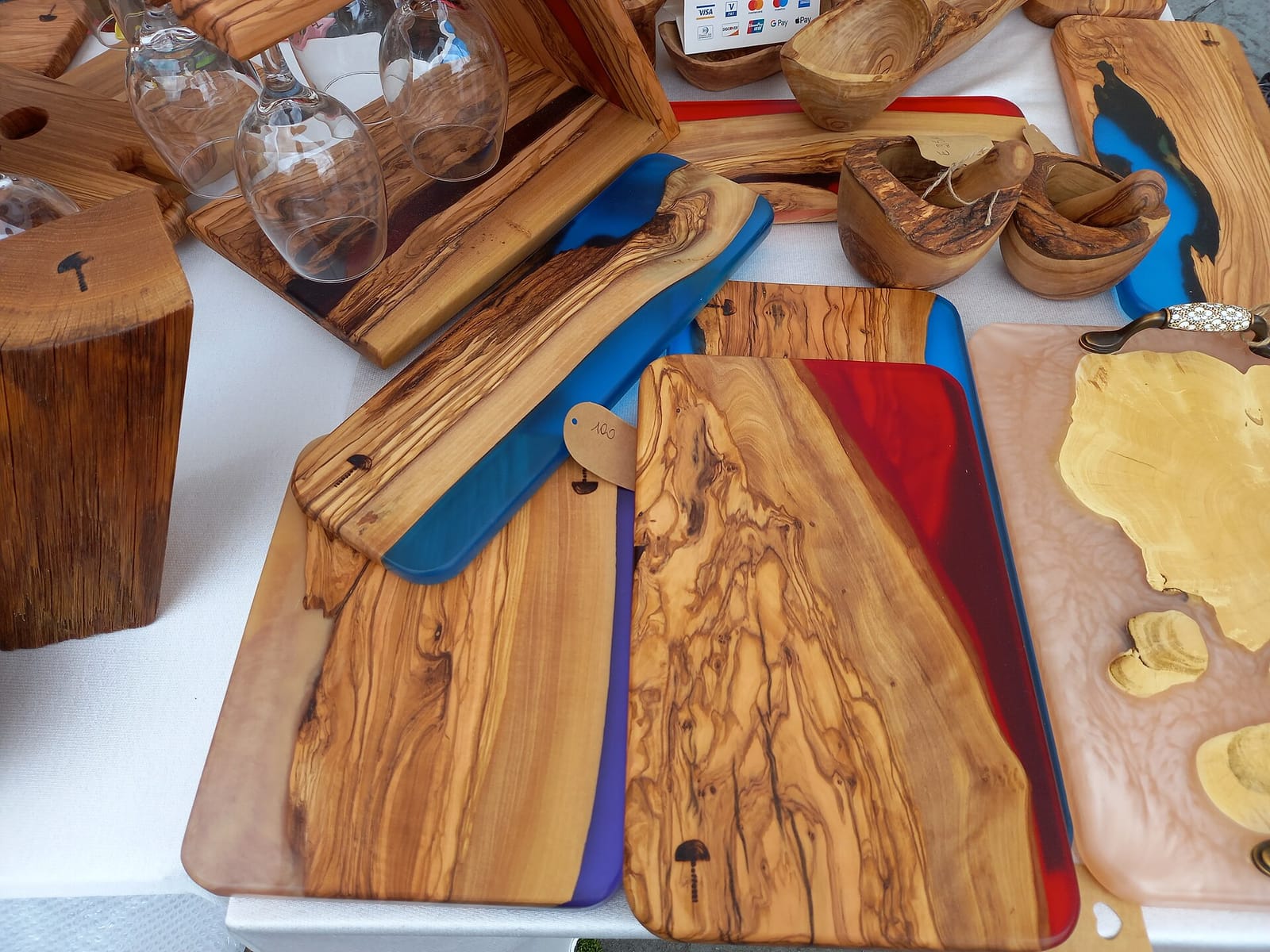
A resin blank, a hybrid wood-resin blank, and a stabilized wood blank are three different products sold under the same search term. Pure resin blanks are cast solid from tinted acrylic or urethane. Hybrid blanks are wood with resin poured into voids and cracks. Stabilized wood is dense hardwood with resin forced through its cell structure under vacuum pressure.
As an Amazon Associate, Lathesong earns from qualifying purchases, at no extra cost to you.
This guide covers buying blanks someone else already cast or stabilized, not doing it yourself. If you’d rather run your own vacuum chamber and mix your own Cactus Juice, the wood stabilizing guide covers that process from setup to cure. Buying pre-made solves the same problem faster, at a price per blank instead of a few hundred dollars in equipment.
What’s the difference between a resin blank and stabilized wood?
The confusion is understandable because all three products come from the same supply chain and often sit in the same bin at a turning show. Here’s what actually separates them.
Pure resin (or acrylic) blanks contain no wood at all. A caster mixes tinted polyester or urethane resin, pours it into a mold, and lets it cure solid. The result is uniform density and color all the way through, with no grain to fight and no moisture to worry about. Turntex sells these as their “Original Cactus Blank” line, cast resin with actual cactus fibers suspended inside for texture.
Hybrid wood-resin blanks start as a real piece of wood, usually a burl, a spalted section, or a bark-edge offcut with natural voids and cracks. The caster pours tinted resin into those gaps and lets it cure, so the finished blank is genuinely part wood and part resin, not wood that merely looks that way. William Wood-Write sells a “Fusion” hybrid line made this way; Turntex calls their version “Texas Hybrid.”
Stabilized wood is wood run through vacuum stabilization: a soft or porous blank sits in a vacuum chamber submerged in thin resin (Cactus Juice is the common brand), the vacuum pulls air out of the cell structure, and resin gets forced in when the vacuum releases. A low, sustained oven bake cures it. The wood still looks like wood, because the resin fills the cells rather than sitting on top of them. It just cuts, sands, and finishes like a much denser hardwood.
| Product | What it actually is | Turns like | Typical price, single small blank |
|---|---|---|---|
| Stabilized wood | Real wood, resin forced into the cell structure under vacuum | Dense, stable hardwood; grain fully visible | $6.95-$12.95 (Craft Supplies USA) |
| Hybrid wood-resin | Wood with voids or burl pockets filled by poured resin | Wood in the wood, acrylic in the resin pockets | $12.99+ (William Wood-Write Fusion line) |
| Pure resin/acrylic | Cast solid from tinted resin, no wood present | Acrylic throughout, no grain anywhere | $2.89-$4.99 (William Wood-Write), $3.95 (Craft Supplies USA) |
What resin and hybrid blanks are actually good for
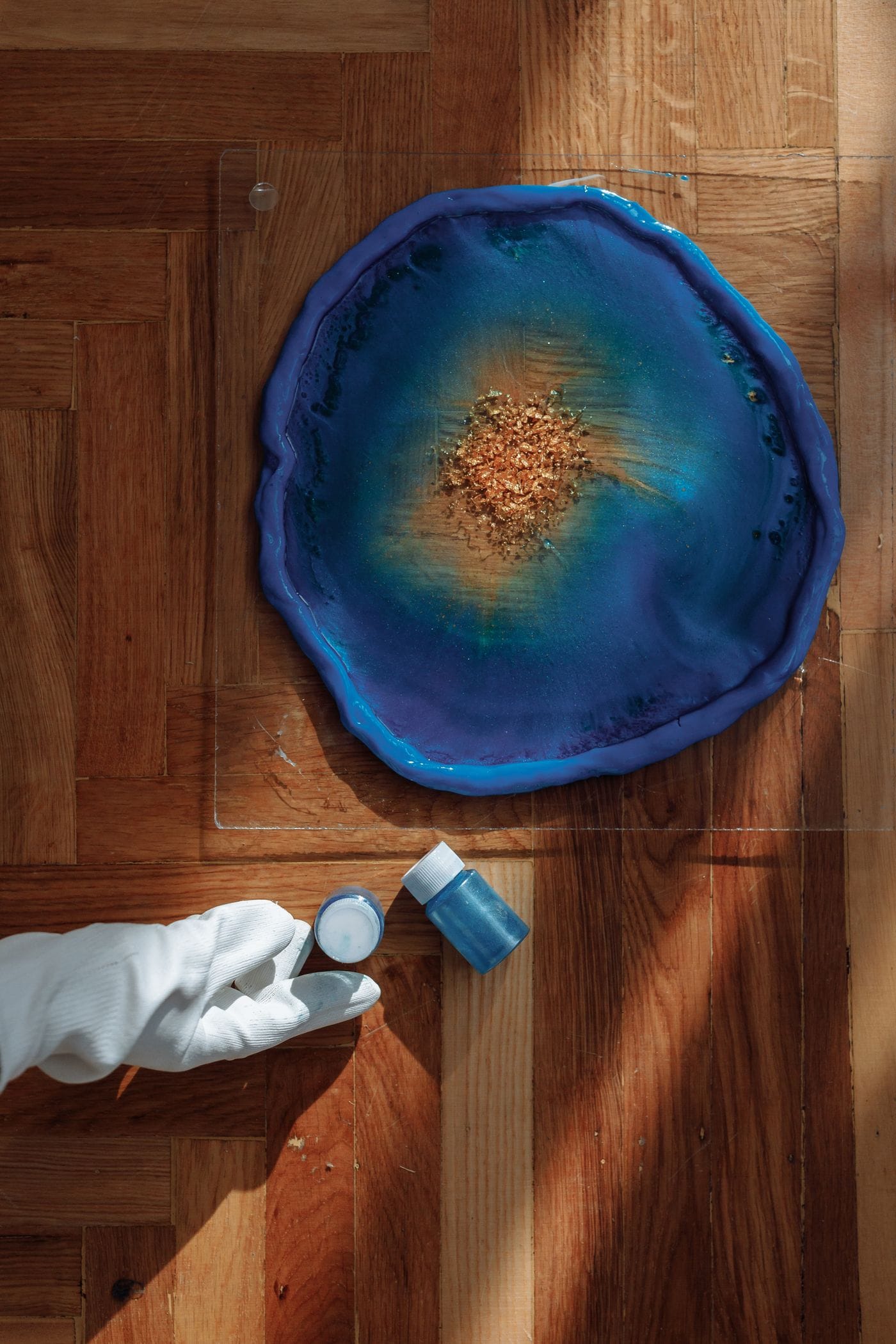
Small, high-detail, high-value-per-cubic-inch turned items. Pens are the obvious one: pen turning uses blanks around 3/4 inch square and 5 inches long, and a resin or hybrid blank at that size costs a few dollars and turns in an afternoon. Knife scales are the other major market: two matched flat pieces, usually 3/16 to 3/8 inch thick, epoxied or pinned to a knife tang. Bottle stoppers, small ornaments, letter openers, and jewelry blanks round out the list.
What resin and hybrid blanks are not good for, at least not economically, is bowls. Pouring resin thicker than about 2 inches in a single shot risks an exothermic reaction: the curing chemistry generates its own heat, and in a deep pour that heat has nowhere to escape, which cracks, yellows, or clouds the casting. Deep-pour formulations exist specifically to manage this in stages, and they’re slower and pricier than a standard casting resin. That’s why full resin or hybrid bowl blanks are a specialty item rather than a stocked one: Turners Warehouse lists an 8-by-3-inch hybrid bowl blank at $35, and as of this writing every size they carry shows sold out. A wood bowl blank of the same footprint runs a fraction of that from a firewood pile or sawmill, covered in the wood-for-turning guide.
Pre-cast to roughly 3/4 by 3/4 by 5 inches, the standard pen-blank footprint. No stabilizing or casting required; drill, mount, and turn like any pen blank.
Hybrid wood-resin blanks: where the two materials actually meet
A hybrid blank is not a stabilized blank with color added, even though they’re sold near each other and sometimes confused in the same forum thread. Stabilizing fills the wood’s own cell structure and leaves the surface intact. A hybrid blank has resin sitting in voids the wood already had (or voids a caster cut into a solid piece on purpose) as thin veins, wide pockets, or an entire missing corner replaced with tinted resin. The visual result is a piece that reads as unmistakably both: real bark edge and burl figure next to a pour of solid color.
Turners on the International Association of Penturners forum report that hybrid blanks built from a stabilized wood core bond to the resin more reliably than hybrids built from untreated wood, because stabilization pre-fills the wood’s own porosity and reduces the gap-filling work the resin has to do at the wood-resin boundary. That boundary is also where hybrids differ most from stabilized wood in the cut: stabilized wood turns as one uniform material, while a hybrid blank has a hard transition every time the tool crosses from resin into wood, or the reverse.
Knife scales get made this way too, not just pens. A burl or spalted offcut with the resin poured through cracks and bark inclusions makes a scale blank with grain and color a solid piece of hardwood can’t match, and the resin fill adds strength in exactly the places (cracks, punky sections) that would otherwise be the scale’s weak point.
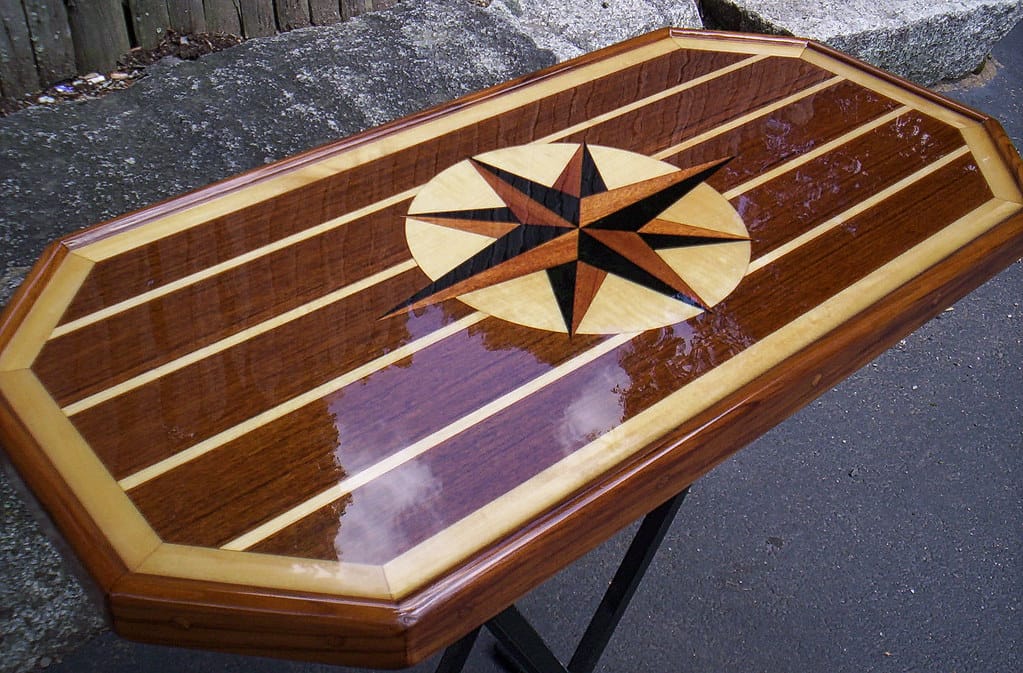
Sold as matched pairs for knife handle work. Confirm the listed thickness against your tang pattern before ordering; scale stock runs thinner than a pen or bottle-stopper blank.
Where to buy real blanks
Turntex (turntex.com) sells both its Original Cactus Blank resin line and Texas Hybrid wood-resin blanks, along with the Cactus Juice stabilizing resin itself if you decide to go the DIY route later. They back their blanks with a replacement policy: full reimbursement if a blank fails from a manufacturing defect, half if the failure traces to user error.
William Wood-Write (penblanks.ca), Canadian, running since 2006, stocks acrylic pen blanks from $2.89 to $4.99, Fusion hybrid blanks at $12.99, and a separate stabilized wood line, all at the standard 3/4-inch pen-blank cross-section.
Craft Supplies USA (woodturnerscatalog.com), the largest US turning-specialist retailer, lists acrylic pen blanks at $3.95 and stabilized wood blanks from $6.95 to $12.95 depending on species and figure.
Woodcraft carries a wood, resin, and acrylic turning-blanks category across its stores and online catalog, useful when you want to see a blank in person before buying.
Amazon multi-packs (Legacy Woodturning, Peachtree, and similar brands) are the fastest way to get a mixed-color assortment of resin pen blanks without hunting a specialty vendor, though the color and pattern in a multi-pack listing is often described as varying piece to piece rather than guaranteed.
Etsy is where most hybrid knife-scale blanks and one-off large hybrid pieces actually live, sold by small casters who pour in limited batches. Expect more variation in size and finish quality between sellers than you’d get from an established supplier, and check recent reviews before committing to an expensive custom pour.
Can you turn resin on a regular wood lathe?
Yes. No special lathe, no special chuck. The mandrel-and-bushing setup from pen turning works identically on a resin blank; you drill it, glue in the tube, and mount it the same way. What changes is technique, and the biggest change is heat.
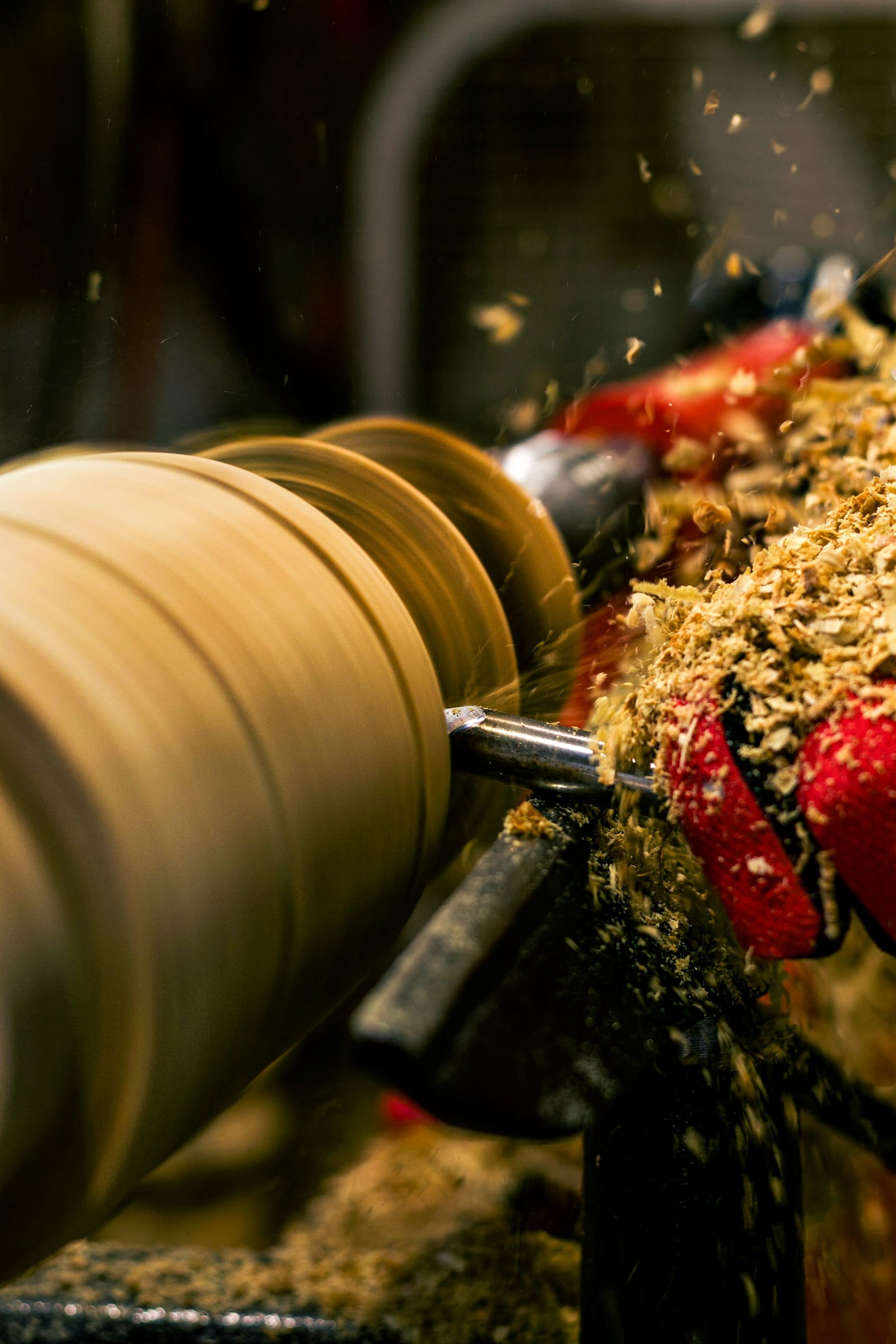
Resin doesn’t cut, it melts if you let friction build. Keep your tools sharp (a dull edge rubs instead of cutting, and rubbing is what generates the heat that gums resin onto the tool) and take light passes rather than deep ones. Many turners reach for a sharp scraper on acrylic and resin sections specifically because a controlled scraping cut, taken lightly, produces less friction than an aggressive skew pass. Sharpening your tools properly matters more on resin than on wood for exactly this reason.
On a hybrid blank, that heat-management approach only applies in the resin sections. The wood sections still need normal grain-direction awareness, the same cutting-with-the-grain habit that governs any wood blank. Crossing the boundary from wood into resin (or resin into wood) mid-cut is where beginners chip or crack a hybrid blank: slow down and lighten the cut right at that transition, every time, rather than carrying one cutting rhythm across the whole blank. Moderate, consistent speed matters here too; the lathe speed guide covers picking an RPM by blank diameter, and resin and hybrid blanks don’t change that math.
Finishing is where resin blanks are genuinely easier than wood. Sand an acrylic or resin blank through a full micro-mesh progression (up through 12,000 grit) and it comes out glass-smooth with no finish coat needed. Wood blanks still need a film finish, CA glue being the standard choice for pens, to get a comparable shine.
Is resin dust dangerous?
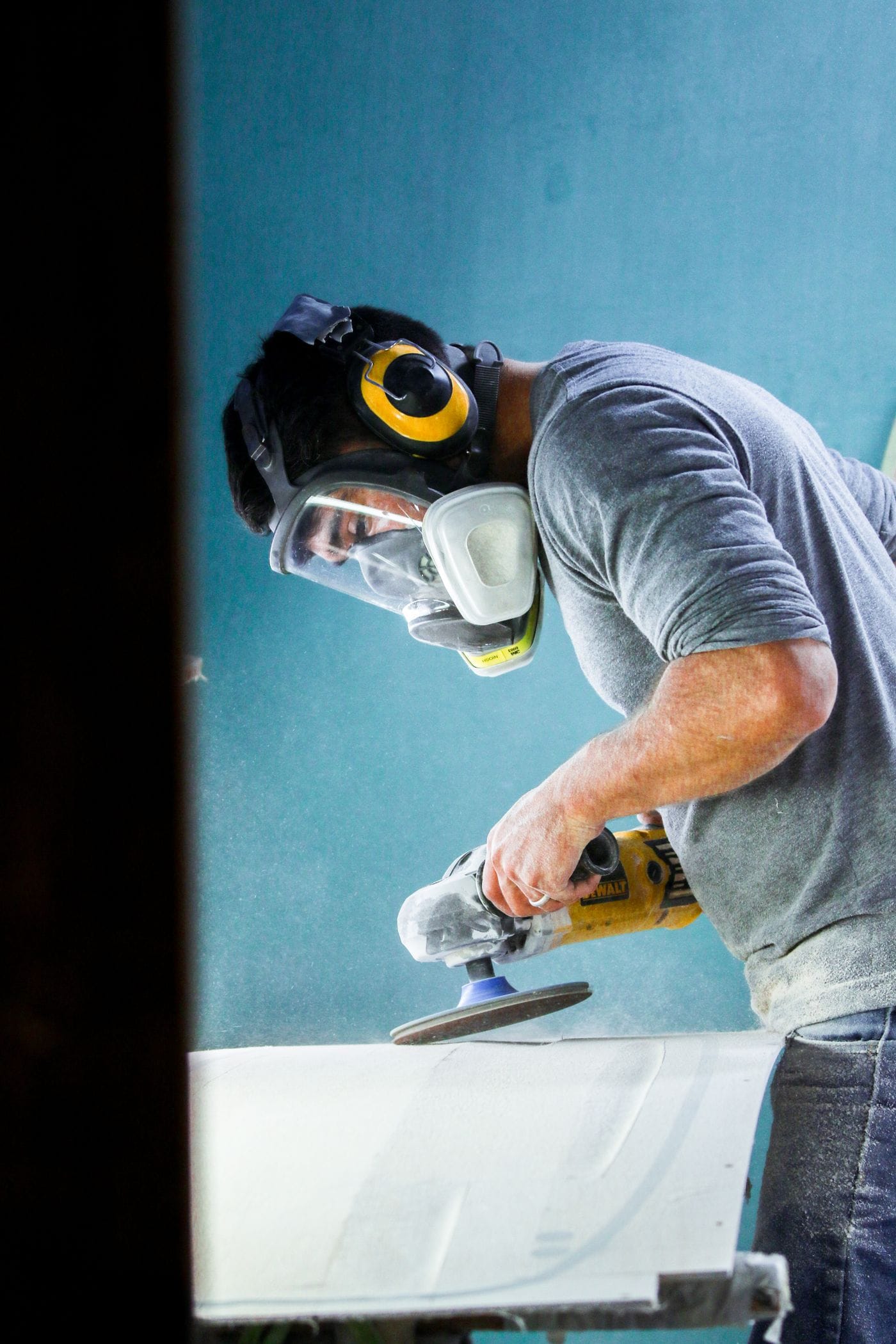
Yes, and it’s a different hazard than wood dust, not the same one in a different color. Cured epoxy and cast resin are chemically inert once fully hardened, but sanding turns that solid mass into airborne particulate, and OSHA’s exposure limit for particulates not otherwise regulated (the category cured resin dust falls under, absent a more specific listed hazard) is 15 mg/m³ total dust and 5 mg/m³ for the respirable fraction over an 8-hour average. An N95 mask filters light dust adequately for short sanding sessions, but for extended resin sanding, safety guides consistently point to P100 filtration instead, which traps 99.97 percent of particles at 0.3 microns against the N95’s 95 percent.
There’s a second hazard specific to resin that wood dust doesn’t have: partially cured material. If you sand a blank before it’s fully hardened, the dust can carry unreacted hardener, and that dust is a sensitization risk in a way fully cured dust is not. Buying pre-made blanks from an established caster mostly sidesteps this, since a commercial blank has had weeks to cure before it ships, but it’s worth knowing if you ever cast your own resin or hybrid material later. If you’re also mixing or pouring resin (not just sanding a finished blank), an organic-vapor/P100 combination cartridge covers both the vapor from fresh resin and the particulate from sanding, where a P100-only filter handles particulate but does nothing against vapor.
Hybrid blanks stack both hazards in one workpiece. The wood portion is ordinary wood dust, which NIOSH classifies as a potential carcinogen at sufficient cumulative exposure and which the dust collection guide covers in full, and the resin portion is the particulate described above. Run your collector, wear the same P100 (or better) protection you’d use for either material alone, and don’t assume that because a hybrid blank is mostly wood, wood-dust precautions cover the resin half too.
Buying versus stabilizing your own
If you turn a handful of pens or knife scales a year, buying beats building. A $3 to $13 blank from Craft Supplies USA or William Wood-Write costs less than an afternoon of your time is worth, and the color and figure are already decided for you. If you’re going through dozens of blanks a year, or you have a pile of punky, spalted, or burl wood that’s too soft to turn as-is, the math flips: a vacuum chamber and a gallon of Cactus Juice pay for themselves fast, and the wood stabilizing guide is where that setup lives. Either path gets you to the same lathe, the same sharp tools, and the same P100 mask when the sanding starts.