Dust Collection for Woodturning: Collectors and Respirators
Dust collection for woodturning: shavings versus fine dust, when a shop vac is enough, what air filtration does, and which respirator turners actually use.
As an Amazon Associate, Lathesong earns from qualifying purchases, at no extra cost to you.
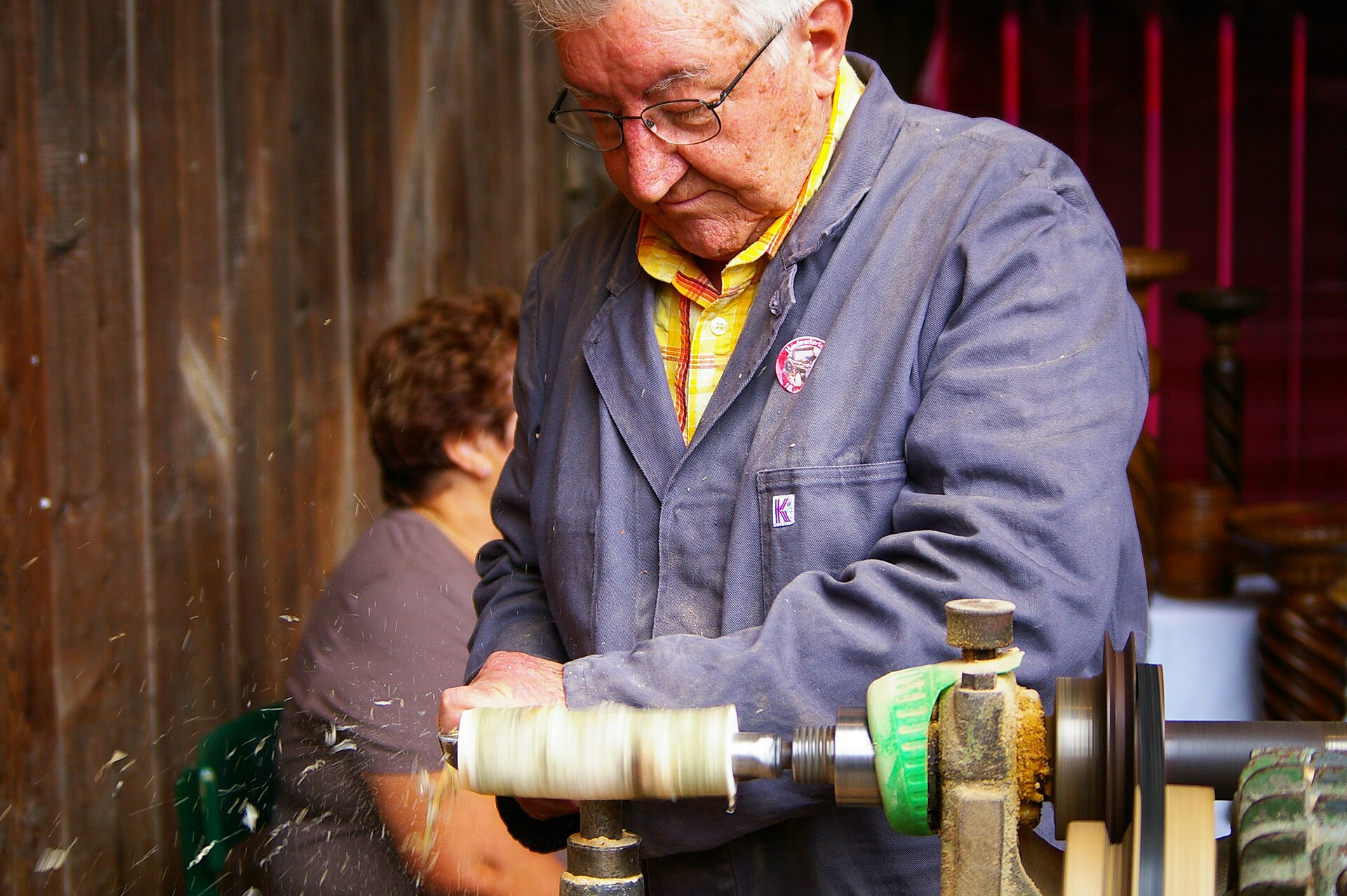
A lathe produces two hazards: heavy shavings that fall and fine dust that stays airborne. A chip collector handles shavings; an ambient air filtration unit handles fine particles. A respirator handles both when those systems are off. Most turning shops need all three, because a collector running at the lathe does not clear what is already suspended in the air.
As an Amazon Associate, Lathesong earns from qualifying purchases, at no extra cost to you.
The three systems address different moments in the session. Knowing which one does what prevents buying the wrong thing first.
The two hazards
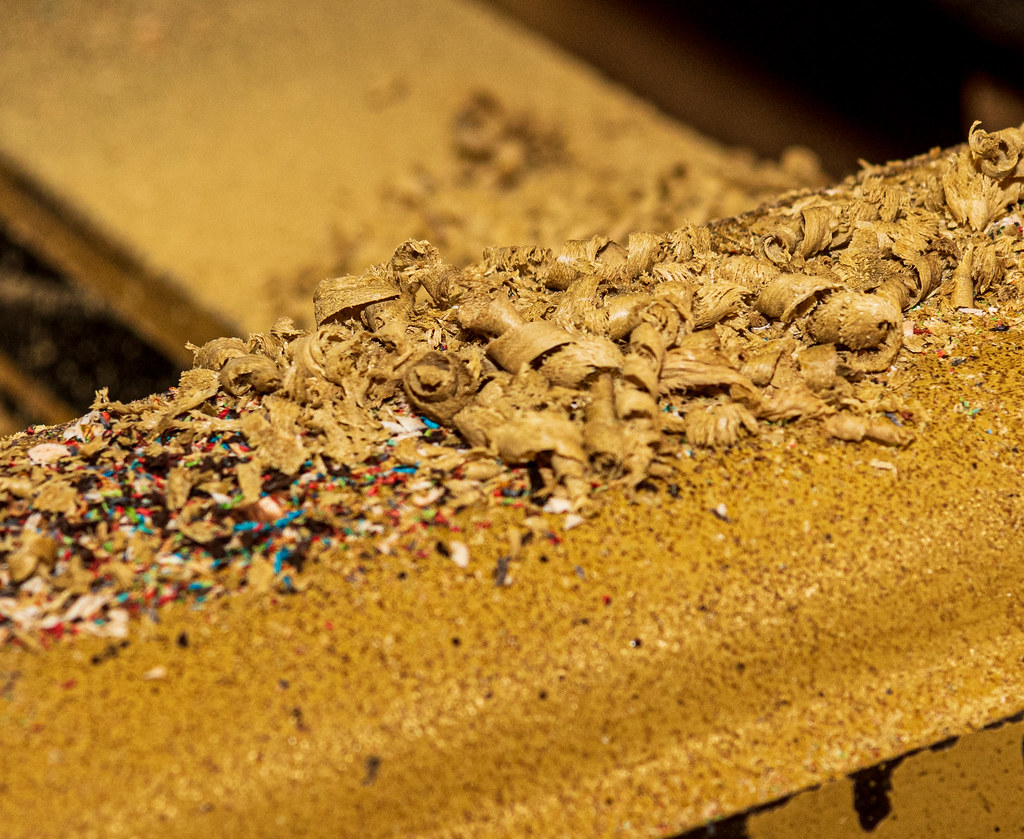
Shavings and chips are what you see on the floor after turning. These range from long curling ribbons (bowl gouge on green wood) to short dry chips (skew on dry hardwood). They are largely benign from a respiratory standpoint: they are too large to stay suspended in the air. They are a fire hazard, a slip hazard, and they clog dust collectors if not separated first.
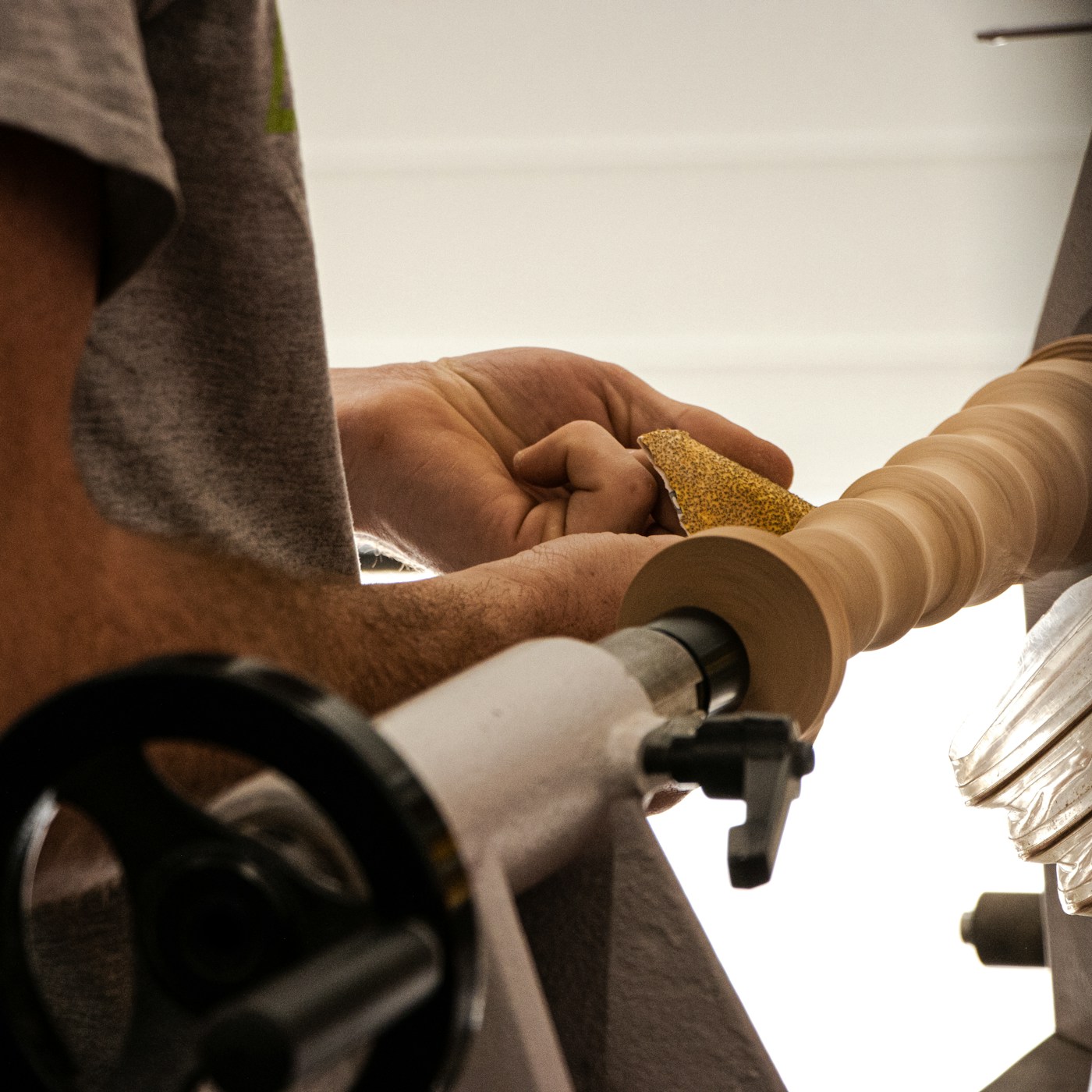
Fine dust is the health concern. Particles below 10 microns in diameter do not settle readily and stay suspended in room air for hours after turning. They penetrate deep into the lungs. Prolonged exposure is linked to asthma and allergic reactions, and for certain species, including exotic hardwoods and domestic species like red cedar and teak, to nasal and sinus cancer. NIOSH classifies wood dust as a potential carcinogen at sufficient cumulative exposure. Fine dust is generated primarily during sanding on the lathe, during dry turning of dense hardwoods, and when turning certain species known for irritating dust (cocobolo, osage orange, African blackwood, some rosewoods).
The common pattern in a turning shop: you turn a bowl, look around, and the floor is covered in shavings. The room looks clear. It is not. The air filtration unit light shows the particle counter is elevated for hours.
Chip collection
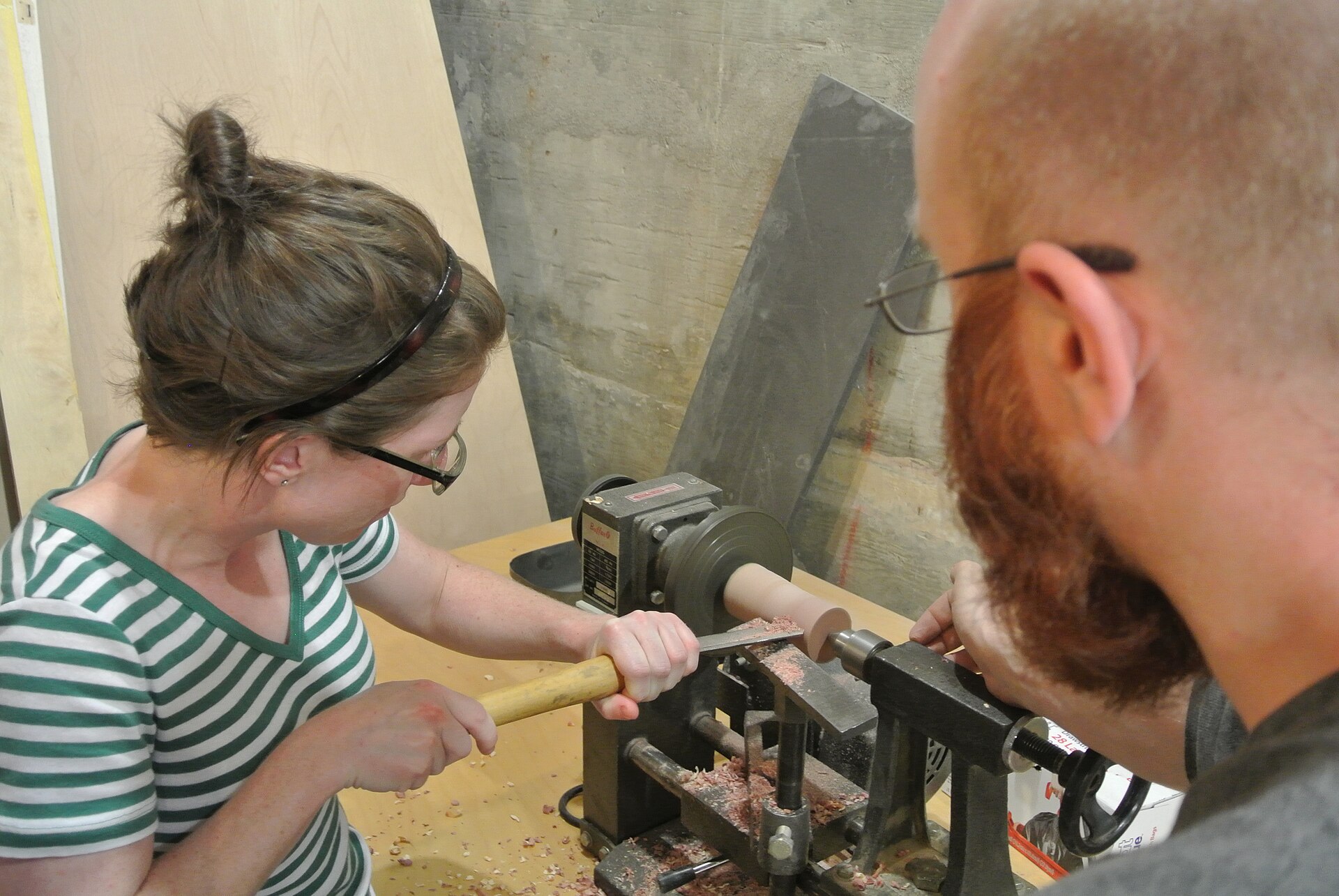
A dust collector positioned at the lathe captures chips and the larger fraction of dust from the turning zone. The key setup choices:
Location: Position the intake hose at the side of the lathe bed opposite the operator, roughly at bed height, positioned to catch chips thrown off the spinning work. Chips travel predictably from a turning piece, and a well-placed hose captures 60 to 80 percent of what comes off the lathe.
Chip separator: A cyclone separator upstream of the collector bag (Oneida Dust Deputy and similar) removes chips from the airstream before they reach the filter bag. Without a separator, chips pack the bag quickly and the collector loses suction. With a separator, the bag fills slowly and the filter stays clean.
Capacity: For a single lathe, a 1 to 1.5 HP single-stage collector is sufficient. The number that actually matters is static pressure, not the CFM printed on the box: a collector rated at 650 CFM at the motor can drop to 300 CFM by the time it reaches a hose 10 feet away, so keep the unit close to the lathe rather than feeding it through a long duct run. If you have a shop vac already, it handles shavings from a midi lathe session adequately, and running the hose close to the workpiece during sanding catches some of the dust too. The main limitation of a shop vac is that its filter is not fine enough to capture particles below 1 micron, and they pass through and exhaust back into the room.
A shop vacuum is an acceptable starting point. A dedicated dust collector with a 1-micron filter bag or cartridge filter is the upgrade that actually captures fine particles at the source.
Ambient air filtration
An ambient air filtration unit hangs from the ceiling and runs continuously. It pulls shop air through a series of filters, typically a pre-filter for coarse particles and a HEPA or similar filter for fine particles. The result is that fine particles generated during turning and sanding are cycled through the filtration media and removed from the room air over 20 to 30 minutes.
The unit does not replace a collector. A collector running at the lathe captures chips and large particles at the source, before they enter room air. The ambient unit handles what escapes collection and what is generated between turning sessions when you are cleaning up.
For turners who sand frequently on the lathe, the ambient unit is more important than for those who sand by hand off the lathe. Sanding on the lathe at speed generates fine dust in quantity, and it disperses throughout the room faster than a collector hose can capture it.
Respirators
A respirator protects you from what the other systems do not capture, when the other systems are not running, and during the highest-exposure moments (sanding, turning exotic species).
N95: Filters 95 percent of airborne particles at 0.3 microns. Adequate for general turning. Must be properly fit-tested (the mask must seal against your face). Disposable. Around $1 to $2 per mask.
P100 (half-face respirator with cartridge filters): Filters 99.97 percent at 0.3 microns. Required for exotic species known to cause sensitization or allergy. Reusable; replace cartridges when you smell breakthrough. $30 to $60 for the respirator, $15 to $30 for replacement cartridge pairs.
The half-mask most shops standardise on, and the cheapest protection that actually reaches the 99.97 percent figure above. Sizes matter here: the seal is the whole mechanism, so a mask that does not sit flat against your face is filtering nothing. Filters are replaced, not the mask.
PAPR (powered air-purifying respirator with face shield): Battery-powered unit draws air through HEPA filters and delivers filtered air inside a face shield. Highest protection, most comfortable to wear because there is no seal pressure against the face. Costs $300 to $500. The AAW recommends this for turners who work with sensitizing species regularly. The Trend Airshield Pro is the unit turners in this bracket usually end up with, and it solves both problems at once: the visor takes the chips and the fan handles the dust, so there is one thing to put on instead of two. Beard growth is the deciding factor for a lot of people, because a half mask cannot seal through one and a powered hood does not need to.
The face shield most turners wear for chip protection is not a respirator. A face shield protects eyes from flying chips. It does not protect lungs. Both are required; they do different jobs.
Protects eyes and face from flying chips and catches; it is not a respirator and does not filter fine dust. Wear it alongside an N95 or P100 mask, not instead of one.
System by situation
| Situation | Recommended |
|---|---|
| Occasional turning, domestic species, hobby use | Shop vac + N95 respirator |
| Regular turning, 2-3 sessions per week | Dust collector + N95 or P100 |
| Daily production turning | Collector + ambient filtration + P100 |
| Exotic or sensitizing species, any frequency | Collector + ambient filtration + PAPR |
The cost of the full system (collector + separator + ambient unit + P100 respirator) runs $500 to $800. This is the right infrastructure for a serious turning shop. Add it in stages if budget is the constraint, starting with the respirator (cheapest, most immediate protection).
For the shop setup that surrounds the dust collection system, the lathe stand and shop guide covers footprint planning, power requirements, and machine height. For the turning that creates the dust, the first bowl guide covers the sequence from blank to finished piece.