Best Lathes for Beginners 2026: By Budget and Goal
The best beginner lathes for 2026 by budget: the WEN 3424T, a used Rikon, the Jet JWL-1221VS pick, and the Laguna Revo 1216, plus what to budget for tooling.
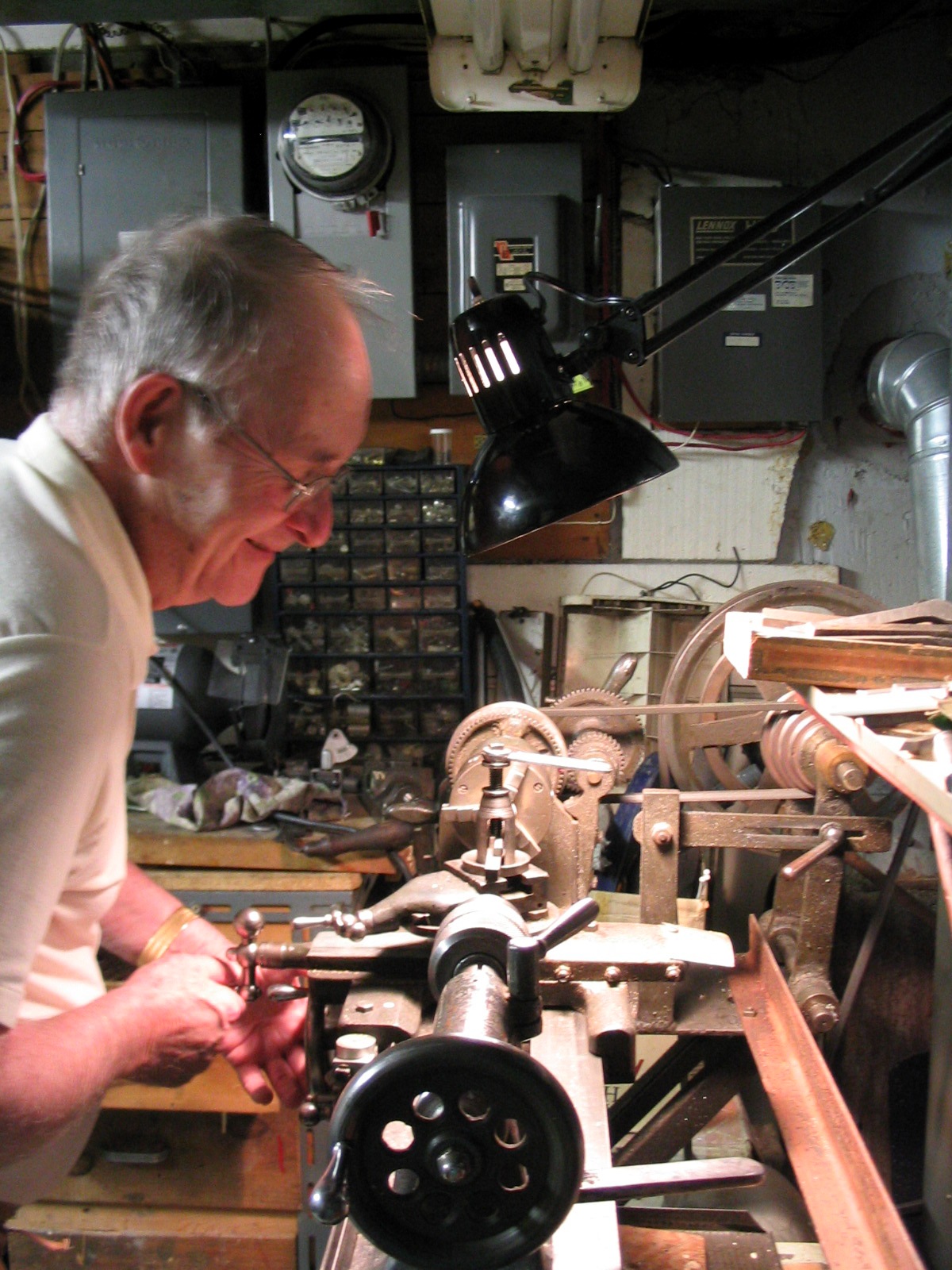
The best lathe for most beginners is the Jet JWL-1221VS at $990: variable speed from 60 to 3,600 RPM, 12.5-inch swing, 21 inches between centers, a five-year warranty, and a parts and support network that matters when you’re still learning. The WEN 3424T at $369 is the right choice when $990 is not on the table. Budget another $350 to $600 for chuck, tools, and sharpening.
The lathe is only one part of what you need to start turning.
As an Amazon Associate, Lathesong earns from qualifying purchases, at no extra cost to you.
Budget tiers
| Budget | Machine | Notes |
|---|---|---|
| Under $400 | WEN 3424T | $369, five fixed belt speeds, 12 in swing |
| $400-700 (used) | Rikon 70-220VSR | Discontinued; used only; inspect before buying |
| ~$990 | Jet JWL-1221VS | Recommended; variable speed, 5-year warranty |
| ~$1,100 | Laguna Revo 1216 | Best if outboard turning is a goal |
All four use the same 1-inch by 8 TPI spindle thread, so a chuck bought for the WEN transfers to the Jet or Laguna without a new insert.
Under $400: WEN 3424T
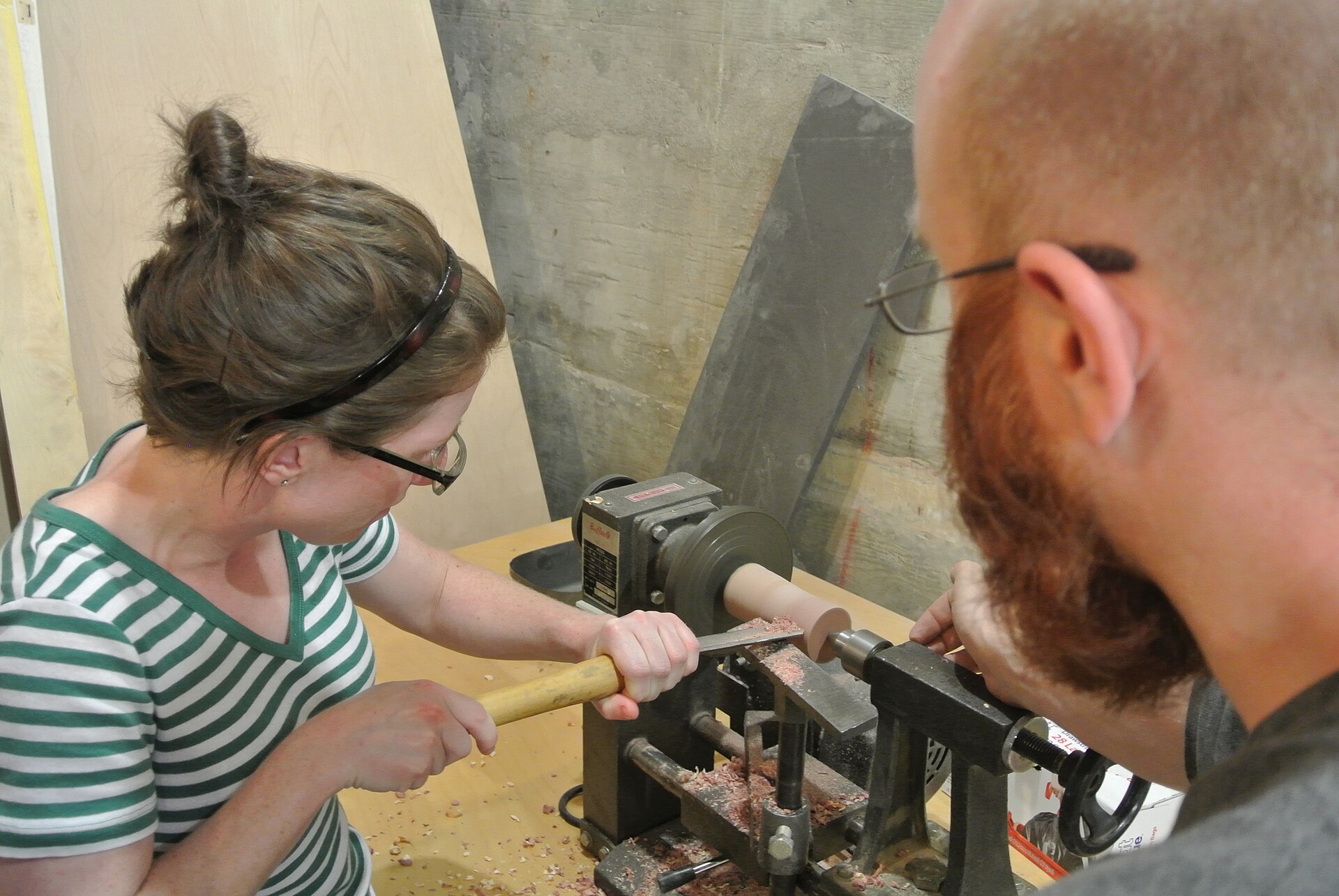
The WEN 3424T (also sold as the WEN LA3424) costs $369 and delivers a 12-inch swing, 18 inches between centers, and five fixed belt-drive speeds: 520, 900, 1,400, 2,150, and 3,400 RPM. Speed changes require stopping the lathe and manually moving the drive belt. No electronic variable speed.
Those five fixed speeds work for most beginner projects. You pick the nearest step to your target RPM and turn. For a 6-inch bowl blank at 1,000 RPM, you select 900 and it is close enough. The friction comes when you want, say, 1,200 RPM for a tricky piece: you choose between 900 and 1,400, and neither is exactly right.
The WEN is a valid first machine. It turns bowls, spindles, and pens. It runs without a 220-volt circuit. It is light enough to move around. The honest trade-off: the belt-change workflow, a motor rated only in amps (not HP), and 70-pound weight that adds vibration on rough blanks compared to heavier machines.
If you want to try woodturning before committing $1,000, the WEN is where to start. If you decide you love it, the Jet is the next machine.
$400-700: Rikon 70-220VSR (used market only)
The Rikon 70-220VSR was discontinued by Rikon in early 2026. New units are no longer available. Used examples appear on eBay and Facebook Marketplace in the $400 to $650 range. The current Rikon midi lathe is the 70-1516VSRK, which bundles a 1.25 HP DC brushless motor and a Nova Z3 chuck, knocking the ~$130 chuck cost off your setup budget compared to the WEN or Jet.
What the used 70-220VSR offers: 1 HP, variable speed from 250 to 3,850 RPM, 12.5-inch swing, 20 inches between centers. More swing and between-centers than the WEN, and true variable speed from 250 RPM on the low end. Many used units sold by club members who upgraded are in good condition.
The risk of buying used: no warranty, no active parts pipeline, and you need to assess the machine yourself before buying. See the Rikon 70-220VSR review for the inspection checklist. If the seller will not let you run it, pass.
Recommended: Jet JWL-1221VS at $990
The Jet JWL-1221VS is the most consistently recommended first serious lathe in AAW chapters and turning forums. At $990, it offers everything a beginner needs and nothing the lathe will become a ceiling for:
Variable speed from 60 to 3,600 RPM. From 60 RPM at the low end, you can start a fresh rough blank without worrying about the piece flying off the lathe. Bring it up to speed as the piece rounds out. At 3,600 RPM on the high end, you cover pen turning and finishing cuts without a belt change.
Five-year warranty. Beginners have catches. Tool rests flex on hard cuts. There are moments of confusion about what just happened. A five-year warranty covers all of it. Jet’s service network means parts are findable when they’re needed.
21 inches between centers. The longest between-centers in the class. Chair legs, tool handles, stair balusters: 21 inches handles them. The shorter alternatives (Laguna at 15.5 inches, WEN at 18 inches) become a limit on longer spindle projects.
121 pounds. Heavy enough to damp vibration from unbalanced rough blanks without being immovable. Securing it to the bench still improves the experience on heavy, out-of-round stock.
$1,100: Laguna Revo 1216
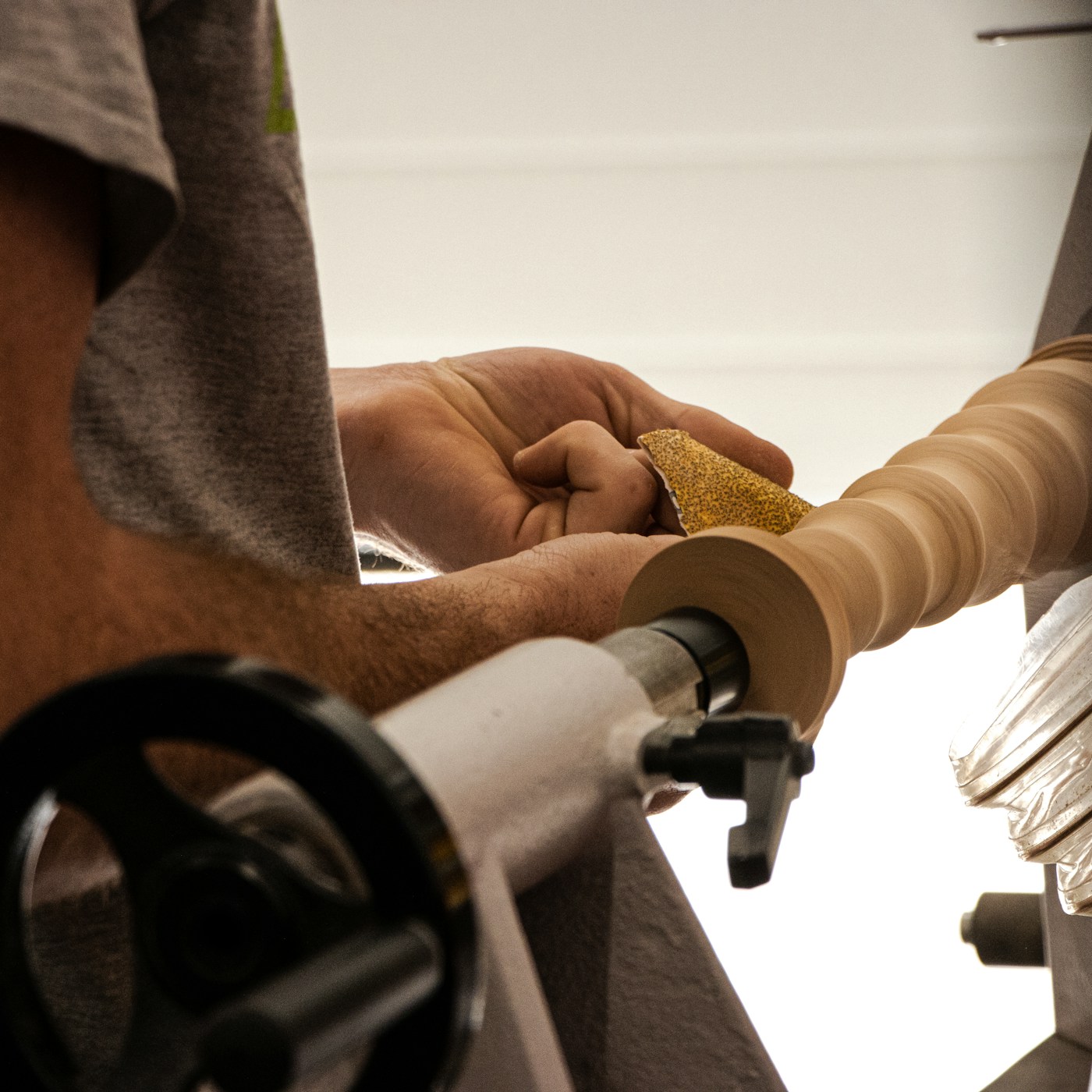
The Laguna Revo 1216 costs $1,099 and is the right pick for one specific type of beginner: someone who already knows they want to turn large platters and shallow bowls outboard at 14 to 16 inches. The Revo 1216 is the only 115-volt machine in the class that offers 16-inch outboard swing.
The trade-off: 15.5 inches between centers, which is 5.5 inches less than the Jet’s 21 inches. For spindle work, that gap is real. The Laguna also requires a dedicated 15-amp circuit, which the WEN and Jet do not.
For most beginners who are not already certain about outboard turning, the Jet’s longer between-centers and lower price make it the stronger first choice.
What to budget beyond the lathe
The lathe is not the whole cost. To actually turn, you need:
A four-jaw scroll chuck. Required for bowl hollowing. The Nova G3 is the standard starting chuck at approximately $130 for the chuck and appropriate insert for a 1-inch by 8 TPI spindle. The full setup is covered in the chuck guide. Get the insert version: since all four lathes above share the same spindle thread, an insert chuck follows you through every upgrade on this page.
A basic tool set. Roughing gouge, spindle gouge, bowl gouge, and parting tool in high-speed steel. A basic four-piece HSS set from reputable makers runs $80 to $150. The first turning tools guide covers what each tool does and what to skip at the start.
Sharpening setup. Sharp tools are not optional. A dull bowl gouge rubs and catches instead of cutting. A slow-speed bench grinder ($60 to $80) paired with a sharpening jig like the Oneway Wolverine or Tormek clone ($80 to $120) is the standard entry setup. The sharpening setup guide covers the full station.
A face shield. Not optional either, and the one item on this list nobody budgets for. A catch throws wood, and it does that on a $369 lathe exactly as readily as on a $990 one. A full face shield runs under $40 and is the smallest line in this entire budget by a wide margin. Safety glasses are not a substitute; they cover the eyes and nothing else.
Realistic total starting budget beyond the lathe: $350 to $600 for chuck, tools, and sharpening. On the WEN at $369, the total is $720 to $970. On the Jet at $990, the total is $1,340 to $1,590. The Jet’s five-year warranty covers the machine while you are in the highest-wear phase of the learning curve.
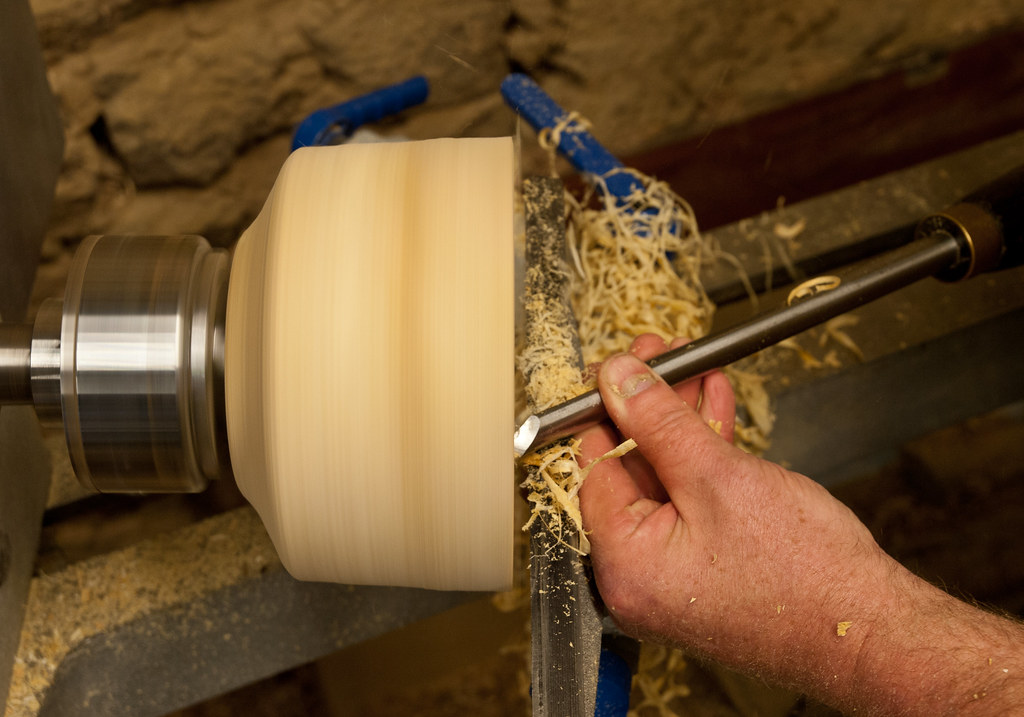
The right answer for most beginners
Buy the Jet JWL-1221VS. It is not the cheapest option, and the WEN is a legitimate starting point. But the Jet’s variable speed, five-year warranty, and 21-inch between-centers mean you will not outgrow it in the first year. The WEN is where to start if the budget is firm at $370. The Laguna is where to go if outboard turning is specifically on the list.
For most beginners, a midi lathe is the right size, not a compromise. It handles bowls to 12 or 12.5 inches, spindle work from 15 to 21 inches, and pen turning without strain. It runs on standard household current, weighs under 125 pounds, and fits into a garage or basement shop corner. The only real reason to skip straight to a full-size machine as a beginner is already knowing you want to turn bowls over 12 inches regularly.
For buyers still unsure, the midi versus full-size guide covers what each class handles and when a full-size machine is worth the cost and 220-volt circuit requirement.