Lathe Size Guide: What Swing and Between-Centers Actually Mean
Lathe swing, between-centers distance, and headstock type explained by project size, so you choose the right machine without overbuying or underbuying.
Swing determines the largest diameter you can turn. Between-centers determines your maximum spindle length. Midi lathes swing 12 inches and reach 18 to 21 inches between centers. Full-size lathes swing 16 to 22 inches and reach 36 to 42. Most turners who overbuy regret the electrical and footprint costs before they regret the capacity.
These two numbers govern every machine in the class. Understanding them before choosing prevents the most common purchase mistake in the hobby.
What swing means
Swing is measured as the diameter of the largest piece that will clear the lathe bed. A 12-inch swing lathe can theoretically spin a 12-inch diameter piece. In practice, a fresh bowl blank that measures 12 inches across is often slightly out of round, and you need a few millimeters of clearance on each side, so the practical working diameter is closer to 11 to 11.5 inches.
The table below maps swing to practical finished bowl diameter:
| Swing | Practical bowl diameter | Class |
|---|---|---|
| 12 in | Up to 10-11 in | Midi |
| 12.5 in | Up to 11 in | Midi |
| 16 in | Up to 14 in | Midi/full |
| 18 in | Up to 16 in | Full-size |
| 20 in | Up to 18 in | Full-size |
| 22 in | Up to 20 in | Full-size |
A 10-inch finished bowl is a standard size for a serving or salad bowl. A 14-inch bowl is a centerpiece piece. A 20-inch bowl is a gallery piece that most turners never attempt. Buy for the work you will do, not the work you might theoretically attempt.
What between-centers means
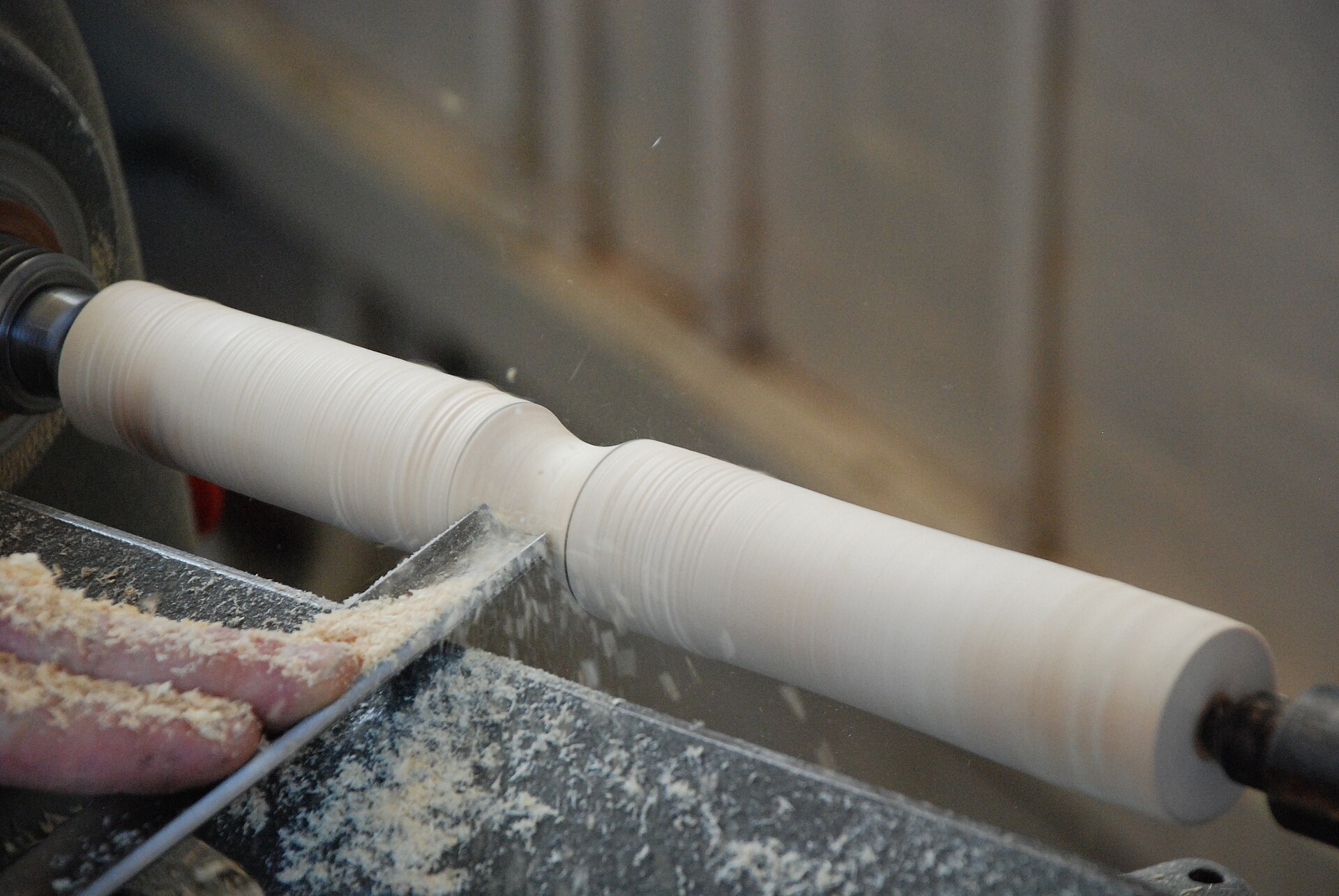
Between-centers is the distance from the tip of the drive center (in the headstock) to the tip of the live center (in the tailstock) when the tailstock is fully extended. This is your maximum spindle blank length.
Common between-centers figures by class:
| Machine | Between-centers |
|---|---|
| WEN 3424T | 18 in |
| Jet JWL-1221VS | 20.5 in |
| Laguna Revo 1216 | 16 in |
| Jet JWL-1840EVS | 40 in |
| Powermatic 3520C | 36 in |
| Grizzly G0766 | 42 in |
A standard chair rung or short stretcher runs 15 to 17 inches and fits any of these machines. A chair leg at 22 inches fits the full-size machines but exceeds the midi class. A table leg at 28 to 30 inches requires a full-size lathe with at least 36 inches between centers. If furniture legs are a regular part of your work, that number becomes the binding constraint, even on a midi lathe that handles every bowl you throw at it.
The size classes in practice
Midi lathes (12 to 16-inch swing):
The WEN 3424T at $369 and the Jet JWL-1221VS at $990 both swing 12 inches. The Laguna Revo 1216 swings 16 inches at roughly $850. All run on 115 volts, weigh under 140 lbs, and fit on a bench. This is the right class for pens, small to mid-size bowls, ornaments, and short spindles. That’s not a beginner ceiling, either. Turners who specialize in pens, smaller bowls, and spindle work turn professionally on midi machines their whole career; the limit is physical capacity, not skill.
Entry full-size (16 to 18-inch swing):
The Jet JWL-1840EVS at roughly $2,500 has an 18-inch swing and 40 inches between centers. It can be configured for 115 volts at reduced power. This is the natural step up from the midi class for turners who want larger bowls and longer spindle work without the footprint or cost of the premium machines.
Full-size floor lathes (20 to 22-inch swing):
The Powermatic 3520C at $5,999 has a 20-inch swing. The Grizzly G0766 at roughly $4,000 has a 22-inch swing. Both require 220-volt circuits and weigh 400 to 726 lbs. This class is for turners who regularly turn bowls over 14 inches or furniture work over 24 inches.
Fixed vs sliding headstock
Most midi lathes and full-size lathes have a fixed headstock. The headstock is bolted at one end of the bed and does not move.
The Powermatic 3520C has a sliding headstock, which repositions along the bed to allow outboard turning of large platters. You can swing a 35-inch platter off the outboard end of the spindle. The Grizzly G0766 has a fixed headstock, so its maximum outboard work is limited to whatever the 22-inch swing allows.
If you plan to turn platters over 20 inches regularly, the sliding headstock on the 3520C is a functional difference worth the premium. If you turn bowls and smaller face work, the fixed headstock is not a limitation.
How to decide
The clearest decision framework is project size. Work backward from the biggest piece you plan to turn regularly, not the biggest piece you might ever turn.
Regular 10-inch bowls: midi lathe. Regular 14-inch bowls: Laguna Revo 1216 or Jet 1840EVS. Regular 18-inch bowls: Powermatic 3520C or Grizzly G0766. Regular furniture legs: full-size lathe with 36+ inches between centers.
One exception worth naming for beginners: if you already know you’ll want 14-inch or larger bowls within a year or two, skip the midi class entirely. A full-size entry machine like the Jet JWL-1840EVS at roughly $2,500 costs more up front, but it beats buying a midi now and a full-size lathe again eighteen months later.
For the detailed comparison between size classes, the midi vs full-size guide covers electrical, footprint, and weight alongside the capacity numbers. For the speed settings that pair with each size class, the lathe speed guide covers the safe RPM formula by blank diameter.